
ACL Graft Options: What Are the Graft Options for Anterior Cruciate Ligament (ACL) Reconstruction?
Patients face many decisions when choosing an ACL injury rehabilitation method, with the most critical decision being the graft to use. Understanding ACL graft options is essential, as patients have many choices when deciding on a graft for their ACL reconstruction based on personal preference. Learning about the available grafts and what they are made of helps patients make informed decisions when undergoing ACL reconstruction.
Patients should also understand how selecting the right type of graft will affect their recovery time, strength, and long-term stability of the knee. In this article, you will learn about ACL grafts, different options for ACL reconstruction grafts, and how surgeons choose which graft type is best for a patient.
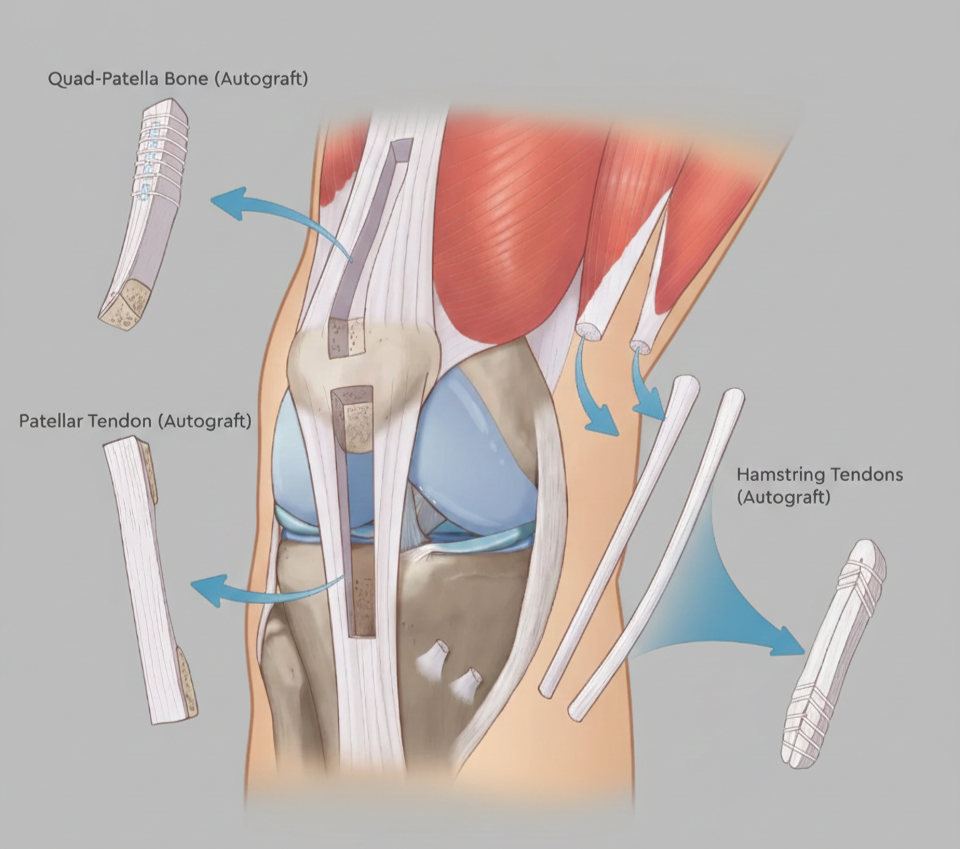
Where’s Your ACL, and Why Does It Matter?
It’s important to know where the ACL is located before discussing how to replace it with a graft. The ACL is a ligament that crosses and runs diagonally in the center of the knee from the femur (upper leg) to the tibia (lower leg). It provides stability to the knee joint while pivoting, jumping, or making sudden changes of direction.
ACLs cannot heal themselves; as ACLs are critical to maintaining proper movement patterns in active adults, surgery is often necessary for ACL repair via grafting to restore function and avoid continued damage.
What Is an ACL Graft?
An ACL graft is a tendon that replaces a torn ligament within the body when surgery (ACL reconstruction) occurs. Understanding ACL graft options is essential, as an ACL graft is used to provide the necessary structural integrity for the new ligament to take root and become a functional ACL in the future.
There are several ACL graft types, broadly categorized into autografts (from your own body) and allografts (donor tissue).
ACL Reconstruction Graft Options
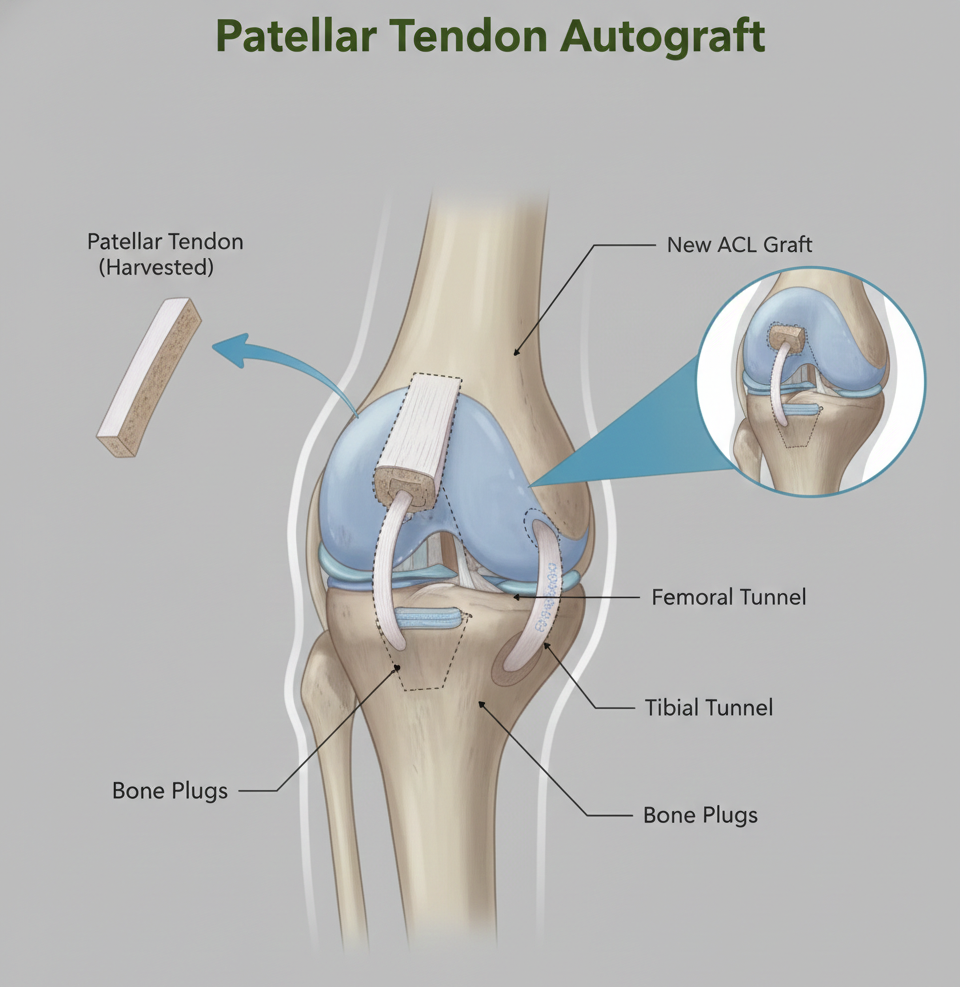
Patellar Tendon Autograft
The patellar tendon autograft, commonly known as the ACL patellar tendon graft, is one of the most reliable ACL graft options and combines the middle third of the patellar tendon with tiny bone plugs from the kneecap and shinbone.
Pros of Patellar Tendon Autograft:
- Bone fixation provides a strong and stable attachment
- Promotes bone-to-bone healing, enhancing graft integration
- Lower chance of graft stretching over time
- Preferred by high-demand athletes for its durability
Cons of Patellar Tendon Autograft:
- Potential for anterior knee pain
- Risk of shin pain during recovery
- Discomfort when kneeling or performing certain movements
This type of graft is very common among competitive athletes and individuals requiring strong rotational stability.
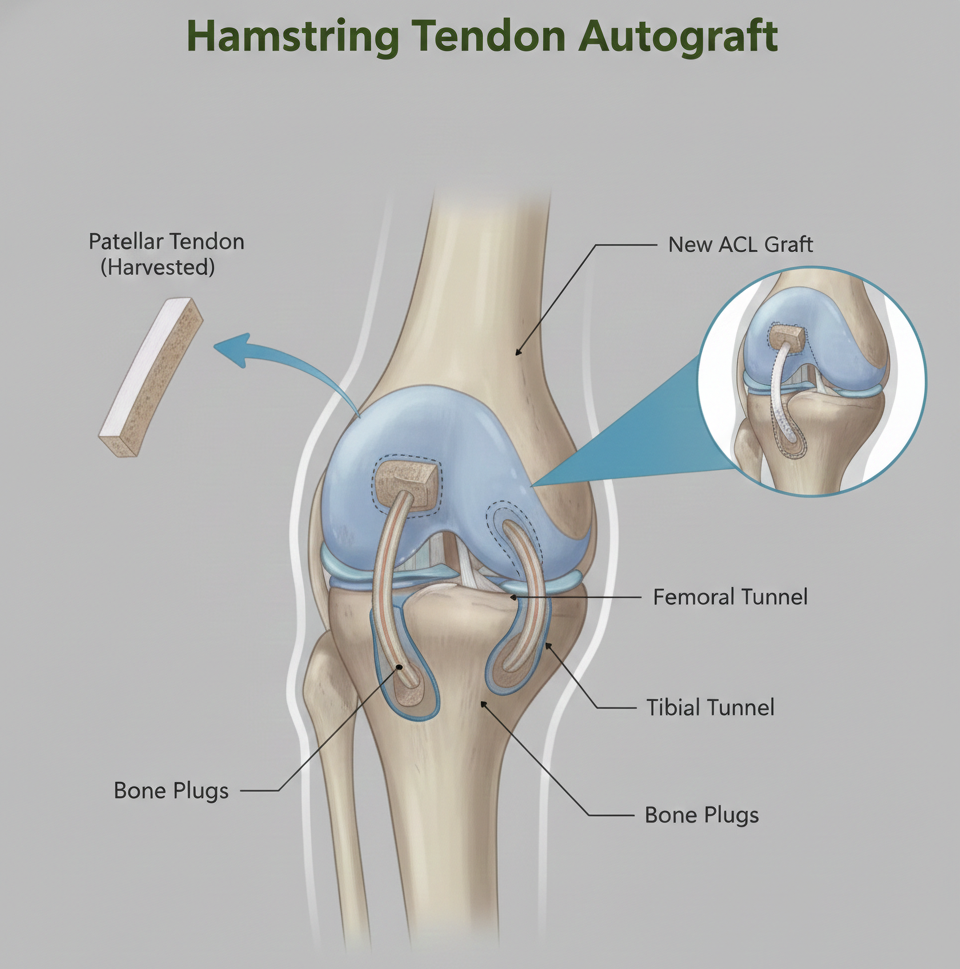
Hamstring Tendon Autograft
The hamstring graft is one of the most commonly chosen ACL graft options and is a tendon taken from your hamstring (the muscle at the back of your thigh). Patients often inquire about the scar associated with the hamstring graft used in ACL surgery; this graft is harvested through a very small incision, resulting in minimal cosmetic appearance.
Pros:
- Less anterior knee pain
- Smaller incision
- Faster early comfort
Cons:
- Slightly longer graft healing timeline
- Potential hamstring weakness
Hamstring grafts are frequently used for recreational athletes and for patients who want to reduce postoperative knee pain.
Also Read – Torn ACL? How to Recognize It and What Treatment to Choose
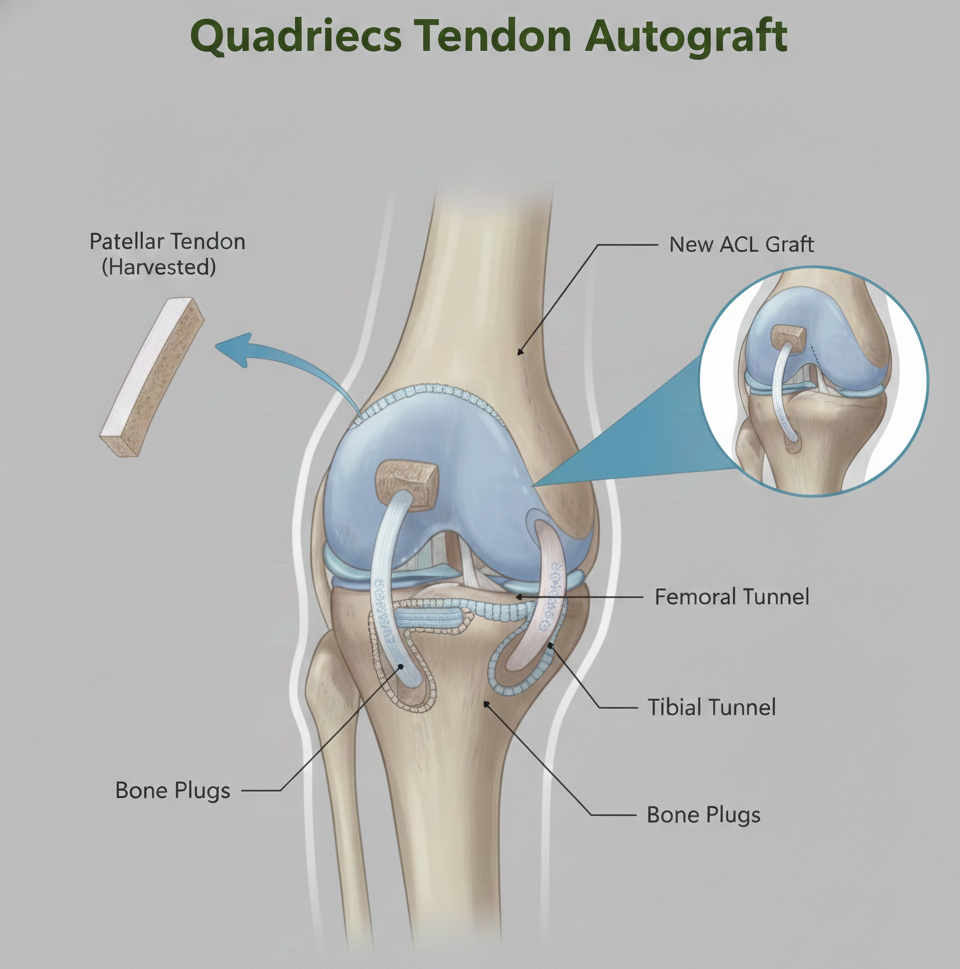
Quadriceps Tendon Autograft
Interest in the quad tendon ACL graft has grown because it provides a balanced combination of strength and decreased donor-site pain.
Pros and cons of the quad tendon for ACL grafts are:
Pros:
- Thick, strong graft
- Less kneeling pain than the patellar graft
- Good option for revisions
Cons:
- May cause temporary quadriceps weakness.
There is limited long-term data for quad grafts in comparison with the older options.
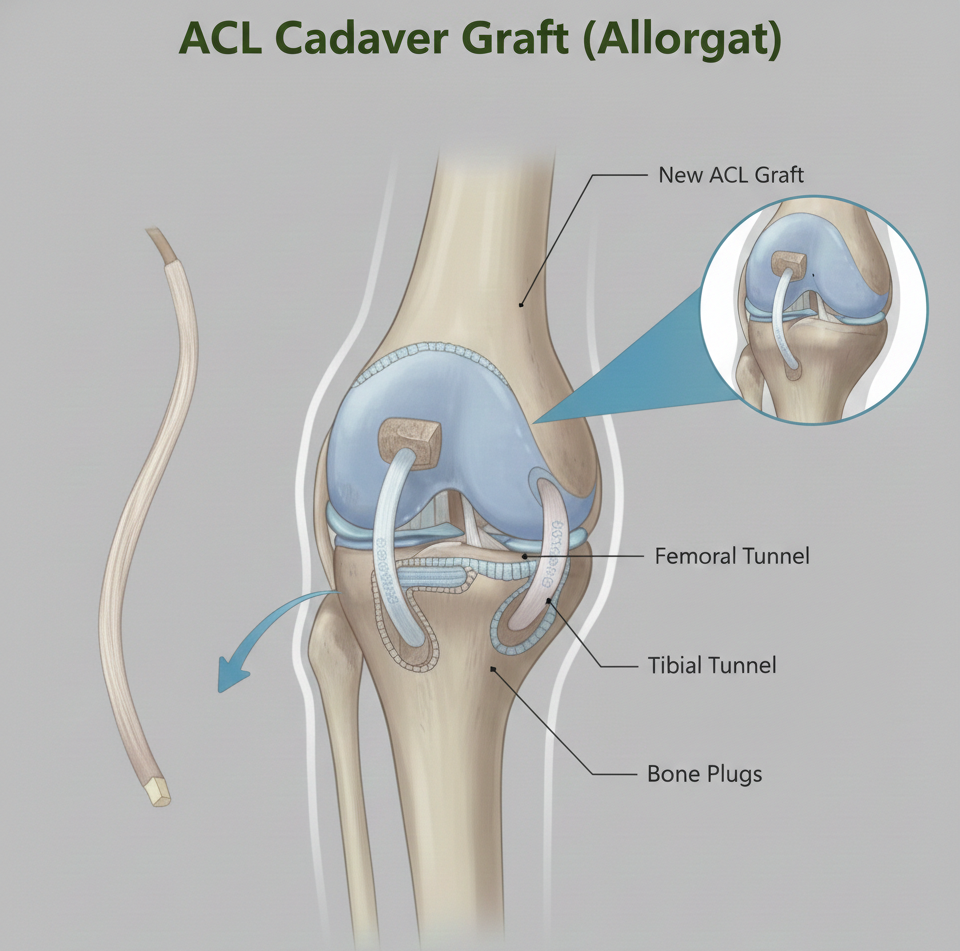
ACL Cadaver Graft (Allograft)
An ACL cadaver graft uses donor tissue, eliminating the need to harvest a tendon from the patient.
Pros:
- Shorter surgery time
- Less initial pain
- No donor-site morbidity
Cons:
- Higher risk of ACL graft tear, especially in young athletes
- Slower graft incorporation
- Slightly higher failure rates
Allografts are often reserved for older patients or those with lower activity demands.
Types of ACL Surgery and Reconstruction
ACL surgery can be performed in many ways, with the most common type being ACL reconstruction. ACL repair is an option; however, ACL reconstruction requires complete replacement of the diseased ACL with a graft from another part of your body (autograft) or from a donor (allograft), offering multiple ACL graft options based on patient needs and surgeon recommendation.
ACL reconstructions can use either single- or double-bundle surgical techniques based on both anatomy and activity level.
Is ACL Graft Stronger Than Original?
One frequently asked question is whether or not the ACL graft is stronger than the normal ACL. Initially, some grafts may be stronger than a native ACL, but during remodeling, they will weaken and become more similar to ligament tissue. As such, long-term success is dependent upon rehabilitation, rather than on the initial strength of the graft.
Do You Need Surgery for a Torn ACL?
Not necessarily. Less active individuals may be treated non-surgically. Athletes and individuals with an unstable knee will likely need surgery to help prevent knee damage.
Final Thoughts on ACL Graft Options
Selecting the best graft type for ACL repair depends largely upon personal characteristics (age), type of activity (athlete), structure (body type), and what an individual wants out of treatment (goals), making it important to understand the different ACL graft options available. When combined with optimal graft type, a comprehensive rehabilitation plan after an ACL repair can ensure that patients will ultimately regain the same or even greater strength and stability in their knees.
For expert evaluation and personalized surgical care, consult Dr. Rik Kundra, a leading knee surgeon in Dubai, specializing in advanced ACL reconstruction graft options and sports knee injuries.
Disclaimer
All content and media on this page are created and published for informational purposes only. It is not intended to be a substitute for professional medical advice and should not be relied on as health or personal advice. Meet Dr. Rik personally for appropriate medical diagnosis and advice.