
Understanding bone on bone knee pain and how to treat it
Knee pain can slowly turn from an occasional discomfort into a daily challenge. Many patients begin by noticing stiffness while walking or climbing stairs, but over time, the pain may worsen and begin to limit routine activities. One of the more advanced stages of knee joint damage is known as bone on bone knee pain.
This condition mainly occurs when the protective cartilage that cushions the knee joint becomes severely worn out. When that cushioning layer disappears, the bones inside the knee joint begin to rub directly against each other. The result can be persistent pain, inflammation, stiffness, and reduced mobility.
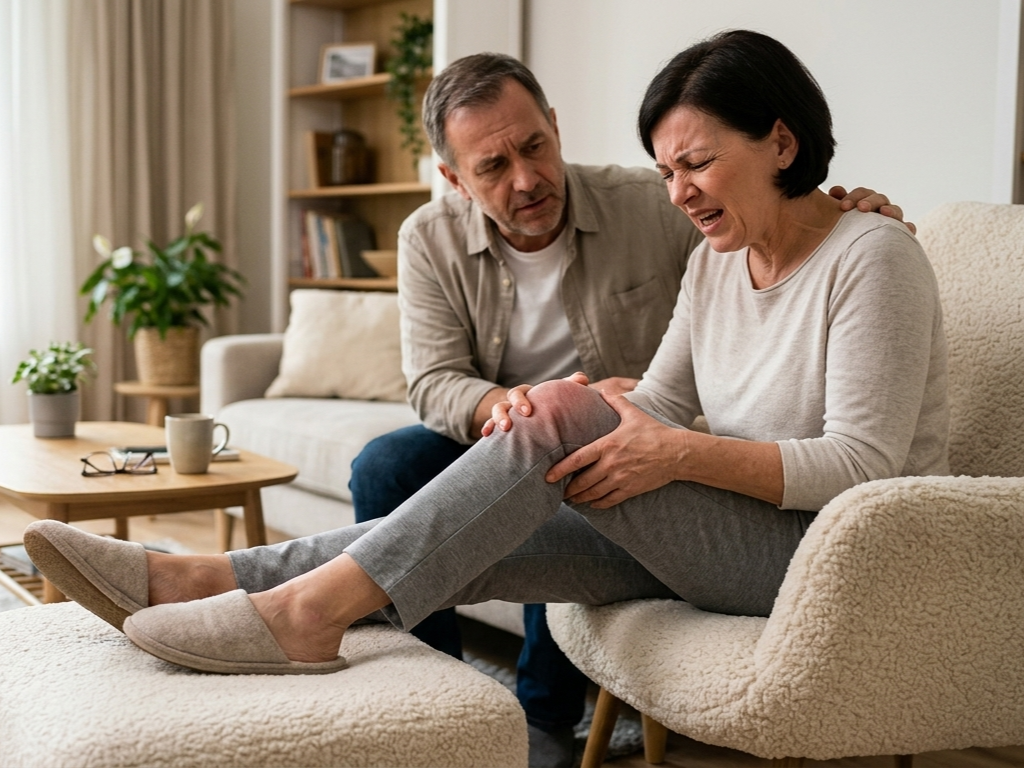
In most cases, bone on bone knee pain develops due to osteoarthritis knee, a degenerative condition where joint cartilage gradually breaks down over time. Globally, osteoarthritis affects more than 300 million people and remains one of the leading causes of disability among adults over 50.
For patients dealing with ongoing knee discomfort, understanding what does bone on bone means, recognizing bone on bone knee pain symptoms, and learning about available treatment options can make a meaningful difference. Orthopaedic specialist Dr. Rik Kundra frequently treats patients in Dubai experiencing advanced arthritis in knee conditions and helps them explore personalized treatment strategies based on their symptoms, lifestyle, and joint health.
What does bone on bone in the knee actually mean?
The knee joint is designed to move smoothly and absorb pressure during daily movement. It is made up of three main bones:
- Femur (thigh bone)
- Tibia (shin bone)
- Patella (kneecap)
These bones are capped with articular cartilage, a smooth and flexible tissue that prevents friction and allows painless movement.
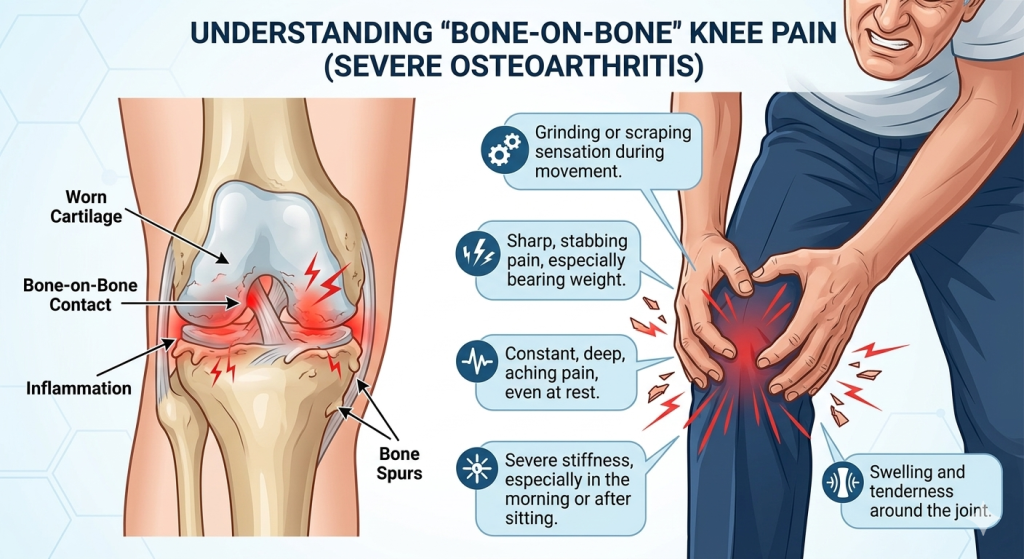
When a person develops osteoarthritis knee, this cartilage gradually wears down. As cartilage becomes thinner, the space between the bones reduces. In advanced stages, the cartilage may almost completely disappear.
At this point, the bones begin to rub against each other during movement, a stage commonly described as knee bone on bone.
This leads to several structural changes in the joint, including:
- Increased friction between bones
- Inflammation of the surrounding tissues
- Formation of bone spurs (osteophytes)
- Progressive joint stiffness and pain
Although the term bone on bone knee pain sounds alarming, it simply describes the severe stage of leg osteoarthritis knee where cartilage protection is largely lost.
What does bone on bone knee pain feel like?
Patients often ask what does bone on bone knee pain feel like, especially when symptoms begin to worsen.
The pain usually develops gradually and becomes more noticeable as joint damage progresses.
Common sensations include:
- Deep aching pain inside the knee
- Sharp pain when walking or standing
- Grinding or crunching sensation during movement
- Stiffness after sitting for long periods
- Difficulty fully bending or straightening the knee
Pain may increase during certain activities, such as:
- Climbing stairs
- Walking long distances
- Standing for extended periods
- Getting up from a chair
In some patients, the knee may also feel unstable or weak.
Common signs of bone on bone in the knee
Recognizing the signs of bone on bone in knee early can help patients seek medical care before symptoms worsen.
Typical bone on bone knee pain symptoms include:
- Persistent knee pain during movement
- Stiffness after periods of rest
- Swelling around the joint
- Limited range of motion
- Grinding or popping sounds in the knee
- Difficulty performing daily activities like walking or squatting
These symptoms often indicate advanced arthritis in knee, especially when cartilage loss becomes significant.
Also Read – Medial Knee Pain (Inner Knee Pain): What It Means
What causes bone on bone knee pain?
The main cause of bone on bone knee pain is what is osteoarthritis of the knee, a degenerative joint condition where cartilage breaks down over time.
There are various risk factors that can increase the likelihood of developing the condition.
Common causes and contributing factors
- Age-related cartilage wear: cartilage naturally thins over time
- Previous knee injuries: ligament tears or fractures can accelerate joint damage
- Excess body weight:Pressure on the knee joint increases on increase in weight
- Genetic predisposition: family history may play a role
- Repetitive joint stress: common in athletes or physically demanding occupations
- Joint misalignment: uneven pressure on the knee joint
Research suggests that the knee is among the most commonly affected joints in osteoarthritis worldwide.
How doctors diagnose bone on bone knee pain?
Diagnosing bone on bone knee pain requires a careful clinical evaluation and imaging studies.
During consultation, Dr. Rik Kundra typically evaluates:
Medical history and symptoms
Patients are asked about:
- Duration of knee pain
- Activities that worsen the symptoms
- Previous injuries
- Impact on daily life
Physical examination
The doctor checks for:
- Joint swelling
- Tenderness around the knee
- Range of motion limitations
- Joint stability
Imaging tests
To confirm the diagnosis, doctors may recommend:
- X-rays: reveal joint space narrowing and bone spurs
- MRI scans: evaluate cartilage damage and soft tissues
These tests help determine the severity of knee osteoarthritis treatment needs.
What helps bone on bone knee pain without surgery?
Many patients first explore what helps bone on bone knee pain without surgery before considering surgical procedures.
Several conservative treatments can help reduce pain and improve mobility.
Physical therapy
Regular targeted exercises help strengthen the muscles around the knee, which helps reduce joint stress.
Common goals of physiotherapy include:
- Improving joint stability
- Increasing range of motion
- Strengthening the quadriceps and hamstrings
Weight management
Reducing body weight can significantly decrease pressure on the knee joint. Even a slight change in the weight, particularly weight loss, may improve symptoms of leg osteoarthritis knee.
Activity modification
Switching to low-impact activities helps protect the joint while maintaining movement.
Examples include:
- Swimming
- Cycling
- Elliptical training
Medications
Doctors may recommend anti-inflammatory medications to help manage pain and swelling.
Injection therapies
In some cases, injections may provide temporary bone on bone knee pain relief by reducing inflammation or improving joint lubrication.
These treatments can help delay surgery and improve quality of life.
When surgery becomes necessary?
If conservative treatments no longer provide relief, surgery may be recommended for how to relieve bone on bone knee pain.
The most common surgical option is total knee replacement, which involves replacing damaged joint surfaces with artificial components.
Surgery may be considered when:
- Pain becomes severe and constant
- Walking becomes difficult
- Daily activities are significantly affected
- Non-surgical treatments fail to provide relief
Modern knee osteoarthritis treatment techniques have made knee replacement a reliable solution for long-term pain relief.
Studies show that more than 90% of knee replacements continue to function well for 15 years or longer. |
Practical tips for managing knee osteoarthritis
Patients often ask how long can you go with bone on bone knee and how to manage symptoms effectively.
Some simple lifestyle strategies can help reduce stress on the joint.
Helpful habits include:
- Maintaining a healthy weight
- Staying active with low-impact exercise
- Avoiding high-impact movements
- Using supportive footwear
- Seeking early medical care for worsening pain
Working closely with an orthopaedic specialist such as Dr. Rik Kundra can help patients monitor their condition and adjust treatment strategies when necessary.
Understanding bone on bone knee pain helps patients choose the right treatment
Living with bone on bone knee pain can affect mobility, independence, and overall quality of life. However, understanding the condition and recognizing early bone on bone knee pain symptoms can help patients seek the right treatment at the right time.
From lifestyle changes and physiotherapy to advanced surgical procedures, several knee osteoarthritis treatment options are available today. Many patients successfully manage symptoms with non-surgical care, while others benefit from knee replacement when joint damage becomes severe.
If you are experiencing persistent knee discomfort or signs of knee bone on bone, consulting an experienced orthopaedic specialist Dr. Rik Kundra in Dubai, can help you receive a clear diagnosis and a personalized treatment plan.
FAQ's
Bone on bone knee pain usually feels like a deep, persistent ache within the knee joint. Patients may also experience stiffness, grinding sensations, swelling, and difficulty bending or straightening the knee.
Common signs of bone on bone in knee include chronic knee pain, joint stiffness after rest, swelling, grinding sounds during movement, and limited mobility.
Non-surgical treatments include physiotherapy, weight management, anti-inflammatory medications, activity modification, knee braces, and injection therapies.
Many people manage symptoms for several years with conservative treatments. However, if pain becomes severe or mobility declines significantly, surgical treatment may be recommended.
Osteoarthritis of the knee is a degenerative condition in which cartilage gradually wears down, leading to inflammation, stiffness, and eventually bone on bone contact.
No. Many patients manage symptoms through non-surgical treatments before considering surgery. Surgery is typically recommended when other treatments fail to provide relief.
If you experience persistent knee pain, swelling, or limited mobility, it is important to consult a specialist. An orthopaedic evaluation can help determine the severity of the condition and the most appropriate treatment plan.
Disclaimer
All content and media on this page are created and published for informational purposes only. It is not intended to be a substitute for professional medical advice and should not be relied on as health or personal advice. Meet Dr. Rik personally for appropriate medical diagnosis and advice.